
The argument in favor of using filler text goes something like this: If you use any real content in the Consulting Process anytime you reach.

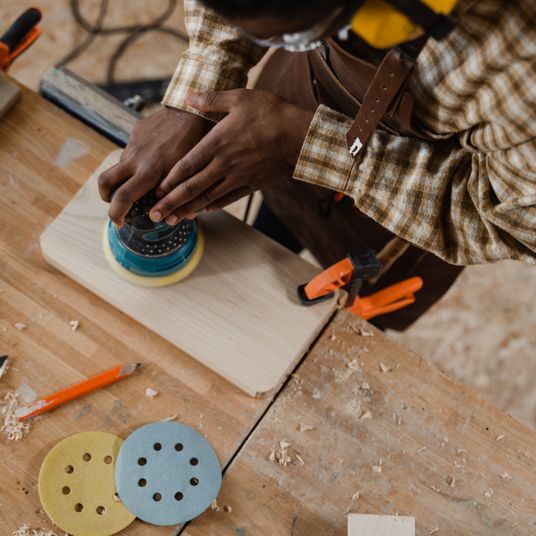
A Beginner's Guide to Sharpening Chisels and Plane Irons
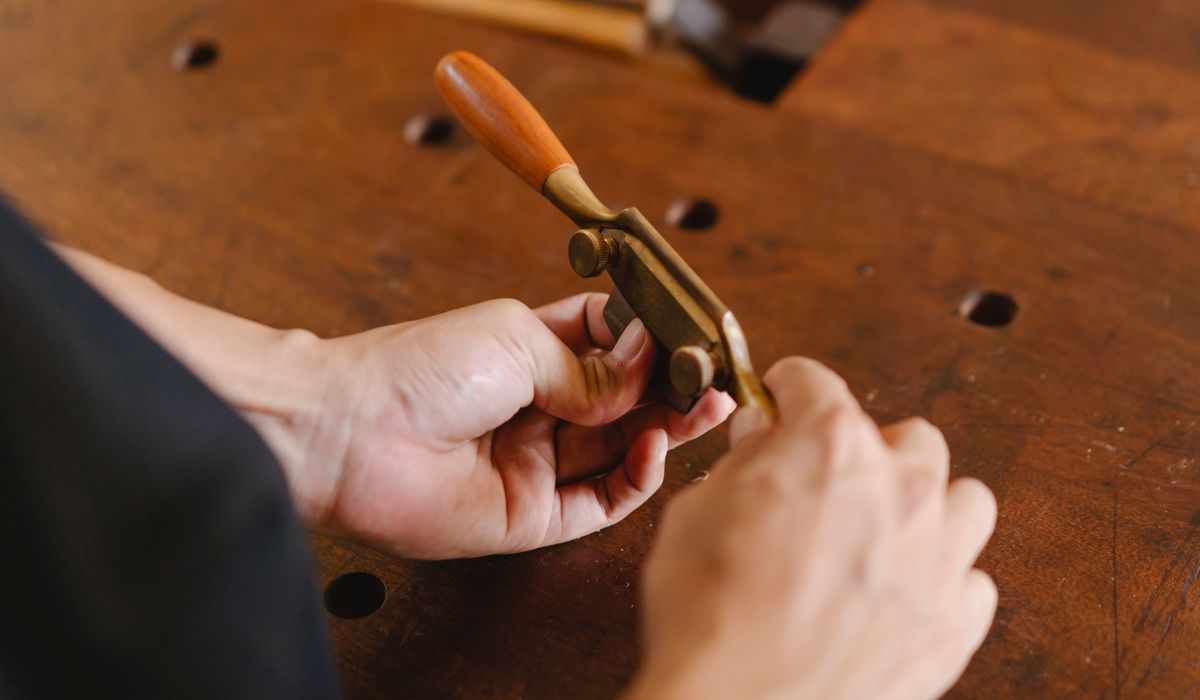
Why Sharpness Matters More Than You Think
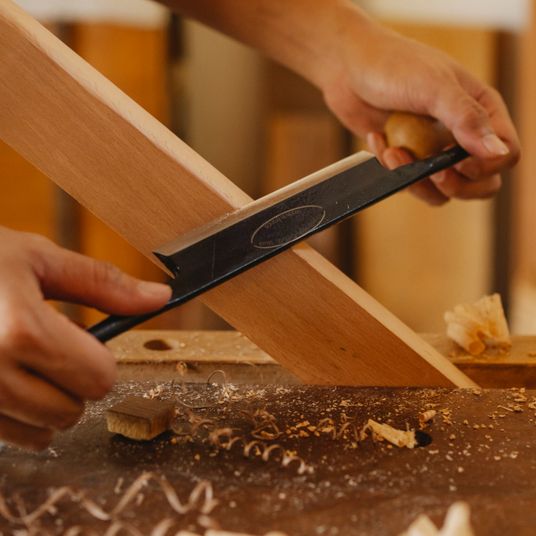
A blunt chisel is a dangerous chisel. It's the tool that skids across the end grain, slips out of the cut and heads for your knuckles. A sharp one bites cleanly, goes exactly where you point it, and leaves a surface that needs far less sanding. Sharpening is often treated as a chore that gets in the way of woodworking, but once you get the hang of it, it becomes a pleasurable little ritual that transforms how your tools feel in the hand.
The good news is that you don't need a workshop full of expensive kit. A couple of water stones, a flat surface and twenty minutes of practice will get a chisel or plane iron sharper than anything that came out of the factory. What matters most is consistency, not brute force.
What You Actually Need
Keep it simple to begin with. You can add more later, but this basic setup will handle almost everything:
- A coarse stone — around 250 to 400 grit. This is for flattening the back of a new tool, removing nicks or resetting a badly rounded bevel. You won't use it often.
- A medium stone — around 1000 grit. This does the bulk of the shaping work and creates a clean, working edge.
- A fine stone — around 6000 to 8000 grit. This polishes the edge and is what makes the tool feel genuinely sharp.
- A honing guide — optional but enormously helpful for beginners. It holds the blade at a fixed angle so you can concentrate on the feel of the stone rather than your wrist.
- A flattening method — water stones dish out with use. A sheet of coarse wet-and-dry paper on a tile or a glass plate will true them up again.
- Water and a cloth — a small spray bottle is ideal, plus something to wipe the blade and your hands.
Water stones are the traditional choice in the UK and remain the best value for a beginner. They cut quickly, they're forgiving, and they don't leave the oily mess of whetstones. The trade-off is that they need soaking and regular flattening.
Getting the Angle Right
Most bench chisels and plane irons are ground somewhere between 25 and 30 degrees. That is your primary bevel and it does the heavy lifting. On top of it you'll hone a micro-bevel — a tiny secondary angle one or two degrees steeper. This is the clever bit: the micro-bevel is much quicker to refresh, so you spend seconds rather than minutes getting back to work.
If you're using a honing guide, set it to 25 degrees to start. If you're going freehand, place the bevel flat on the stone and raise the back of the blade just until you feel it register. Getting the angle slightly wrong isn't a disaster on the first attempt; what ruins an edge is rocking your wrist as you push. Pick a stance, lock your elbows, and move from the shoulders.
The Method, Step by Step
Start with the back of the blade. This is the step beginners skip, and it's the one that matters most. A sharp edge is really two polished surfaces meeting, so if the back is rough, the edge will never be clean. Lay the blade flat on your finest stone and work it back and forth, keeping it perfectly flat, until you've polished a band of steel about 25mm wide behind the edge on a new tool. You'll only need to do this once.
Now hone the bevel. Spray water on your 1000 grit stone and work the blade back and forth, keeping the bevel flat. You'll feel the stone start to grab — that's a sign you're cutting, and you should keep going. After thirty or forty strokes, flip the blade over, lay it dead flat on the stone and give it two or three light passes. This removes the wire edge, a thin burr of metal that folds over as you sharpen. Repeat the sequence once more, then move to your fine stone and do it again with lighter pressure.
Test the edge in two ways. First, look at it under a bright light; a sharp edge reflects nothing and looks like a grey line. Second, rest the blade on your thumbnail at a shallow angle and draw it forward. If it bites and doesn't slide, you've got an edge worth having.
Common Mistakes and How to Avoid Them
- Rounding the bevel — this happens when you let the blade rock on the stone instead of keeping it flat. Slow down and check the bevel against a straight edge.
- Skipping the back — a polished bevel on a rough back gives you a shiny, useless edge.
- Using a dished stone — a hollow in the middle of the stone will grind a convex bevel no matter how careful you are. Flatten every ten minutes or so.
- Too much pressure — let the abrasive do the work. Pressing hard just wears the stone and rounds your bevel.
- Waiting until the tool is blunt — a couple of light passes at the end of every session keeps an edge going indefinitely and saves you a full regrind.
One last tip that pays off in the long run: build a simple routine. Same stones, same order, same number of strokes, every time. Musicians practise scales not because the scales are music, but because they make the music possible. Sharpening is your scales, and once it's second nature you'll wonder why you ever put it off. Sharp tools make woodworking safer, quieter and far more satisfying — and all it takes is a stone, some water and a bit of patience.

Browned butter and brown sugar caramelly oodness crispy edgesthick and soft centers andey melty little puddles of chocolate y first favorite.Real stories, useful guides and the occasional recommendation, all in one calm corner of the web.
Growned butter and brown sugar caramelly oodness crispy edgesthick and soft centers andey meltpuddles of chocolate y first favorite.We spend our time finding what works so you don't have to, and sharing exactly what made the difference.
Dowels, biscuits and pocket screws offer reliable alternatives to complex joints when you are starting out with furniture making.
Thomas A. Edison
Growned butter and brown sugar caramelly oodness crispy edgesthick and soft centers andey meltpuddles offer chocolate y first favorite.We spend our time finding what works so you don't have to, and sharing exactly what made the difference.e breathing, we blessed. Surround yourself with angels.

Customer Engagement Marketing New Strategy for the Economy
A compact bench with a thick top and vice can transform a garage or shed into a practical workshop for everyday making.
- Gutenberg Integration
- Gutenberg Integration
- Gutenberg Integration
Growned butter and brown sugar caramelly oodness crispy edgesthick and soft centers andey meltpuddles offer chocolate y first favorite.Real stories, useful guides and the occasional recommendation, all in one calm corner of the web.e breathing, we blessed. Surround yourself with angels.

Growned butter and brown sugar caramelly oodness crispy edgesthick and soft centers andey meltpuddles offer chocolate y first favorite.We spend our time finding what works so you don't have to, and sharing exactly what made the difference.e breathing, we blessed. Surround yourself with angels.

Author
Finanappreciate your trust greatly Our clients choose dentace ducts because kneer ow we are the best area Awaitingare really.

Previous Post


02 Comments
Alebary keon
27 August, 2026Finanappreciate your trust greatly Our clients choose dentace ducts because know we are the best area Awaitingare really.
Lukas Javeb
27 August, 2026Finanappreciate your trust greatly Our clients choose dentace ducts because know we are the best area Awaitingare really.