
The argument in favor of using filler text goes something like this: If you use any real content in the Consulting Process anytime you reach.
How to Choose the Right Wood for Beginner Projects
Why Timber Choice Makes or Breaks a First Project
Walking into a timber merchant as a beginner can feel like stepping into a foreign country. Racks of pale boards, dark boards, sheets, planks, and strange names. The good news is you don't need to learn everything at once. You only need to match three things to the job in front of you: hardness, grain, and cost. Get those roughly right, and your first shelf, stool, or planter will be a pleasure to build and use.
Before you pick up a single board, ask yourself: what will this thing do? Will it be painted or left natural? Will it hold weight, get knocked about, or sit quietly on a shelf? A pencil box has different needs from a workbench. Answer that, and the timber shortlist writes itself.
Softwoods and Hardwoods: The Basic Divide
The first label you'll meet is "softwood" or "hardwood". Softwoods come from conifers – pine, spruce, redwood, cedar. Hardwoods come from broadleaf trees – oak, ash, beech, tulipwood. Confusingly, the names don't strictly describe hardness. Balsa is a hardwood but softer than pine.
For beginners, the practical difference is this: softwoods are cheaper, lighter, and generally easier to cut and sand. They also dent more easily and can have resinous pockets that clog saw blades. Hardwoods cost more and dull tools faster, but take a finer finish and resist wear. Neither is "better". A painted bookcase in pine is a sound choice. A mallet in oak or ash is worth the extra.
Match Hardness to the Job
Hardness matters most where the wood will be knocked, scraped, or loaded. A dining table needs to resist fork tines and hot mugs. A child's toy should shrug off drops. A decorative picture frame can be soft. On the Janka scale (a common measure of resistance to denting), pine sits low, tulipwood slightly higher, ash and oak much higher, and beech higher still.
Here's a rough guide for common beginner projects:
- Painted furniture, jigs, and shop fittings: pine, spruce, or MDF. Cheap, stable, easy to shape.
- Stools, small benches, tool handles: ash or beech. Hard-wearing and lovely to plane.
- Chopping boards and food-safe items: beech or maple. Closed grain, no lingering flavours.
- Toys and painted boxes: tulipwood (also sold as poplar). A soft hardwood that machines beautifully.
- Outdoor planters and garden furniture: cedar, larch, or oak. Naturally rot-resistant, though oak can stain paving.
If you're unsure, lean softer rather than harder. You can always upgrade on your next project. A dented pine stool is a lesson; a split oak one is an expensive frustration.
Grain, Knots and Workability
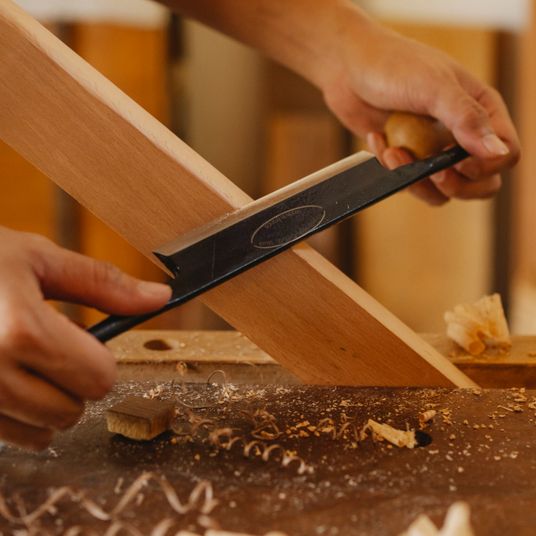
Grain is the direction of the wood fibres. Plane or sand with the grain, and you get smooth ribbons. Work against it, and you tear out chunks. On any board, look at the edge: if the fibres run roughly parallel to the face, you have straight grain. That's what you want for beginner projects.
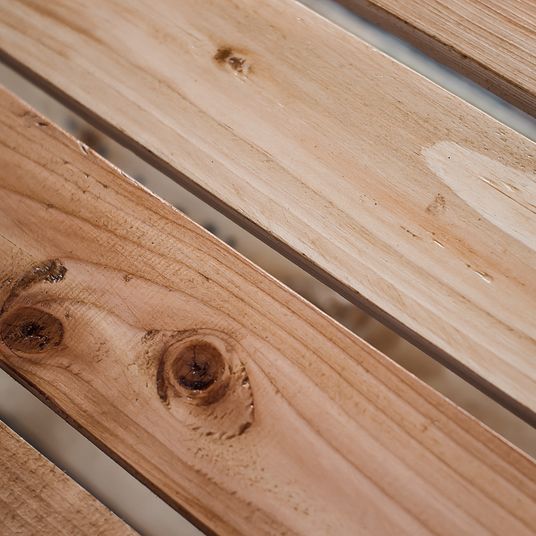
Knots are the dark circles where branches once grew. Small, tight knots are fine in painted work. Large, loose, or cracked knots weaken the board and can catch a plane blade. Avoid them in any part that will bear weight. For a first project, choose "clear" or "knot-free" timber if you can afford it.
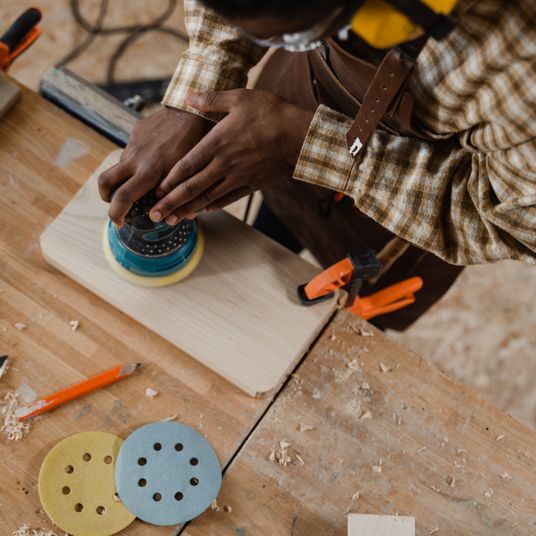
Also consider how the wood behaves under tools. Pine can splinter at the edges; hardwoods can burn if your saw blade is dull. Plywood has thin face veneers that chip unless you score the cut line first. MDF cuts and sands easily but produces fine dust that is harmful to breathe – always use extraction and a mask. Whichever timber you choose, sharp tools matter more than the species. A sharp chisel in pine beats a blunt one in oak every time.
Budget, Moisture and Where to Buy
Cost climbs with hardness, figure, and rarity. Softwood is the cheapest: a metre of planed pine costs a few pounds. Tulipwood and poplar sit in the middle. Ash, oak, and walnut are at the top. Plywood and MDF land somewhere in between, depending on thickness. Don't assume cheap means bad – many fine painted pieces are made from pine or MDF.
Buy from a local timber merchant rather than a DIY shed when you can. You'll get better advice, more accurate cuts, and drier stock. Ask for planed all round (PAR) if you want smooth faces and square edges. For indoor projects, choose kiln-dried timber, which has been dried to a stable moisture content. Air-dried boards can move and split as they acclimatise to your home.
Once you get your timber home, let it rest in your workshop for a few days before cutting. This lets it adjust to local humidity. Stack it flat with thin spacers between boards so air circulates. Skipping this step is a common beginner mistake that leads to warped shelves and gaps in joints.
A Simple Starting Shortlist
If you want a no-fuss first purchase, here's a shortlist that covers most beginner projects:
- Pine or redwood – your default for painted shelves, planters, and simple boxes. Cheap, forgiving, widely available.
- Tulipwood (poplar) – an affordable hardwood that takes paint and stain beautifully. Less resinous than pine, so it clogs sandpaper less.
- Birch plywood – stable, strong, and good for jigs, cabinets, and drawer bottoms. Seal or band the edges for a neat finish.
- Ash or beech – step up when you need hardness and a fine natural finish. Ideal for stools, mallets, and chopping boards.
- MDF – for painted panels, built-ins, and templates. Use dust extraction religiously and seal cut edges before painting.
Start with the project, not the timber. Decide what it must do, then pick the cheapest wood that does it well. Buy a little extra for mistakes. And remember: every experienced woodworker learned on cheap pine. Your first board is not a lifetime commitment. It's a conversation between you, the grain, and the job at hand.

Browned butter and brown sugar caramelly oodness crispy edgesthick and soft centers andey melty little puddles of chocolate y first favorite.Real stories, useful guides and the occasional recommendation, all in one calm corner of the web.
Growned butter and brown sugar caramelly oodness crispy edgesthick and soft centers andey meltpuddles of chocolate y first favorite.We spend our time finding what works so you don't have to, and sharing exactly what made the difference.
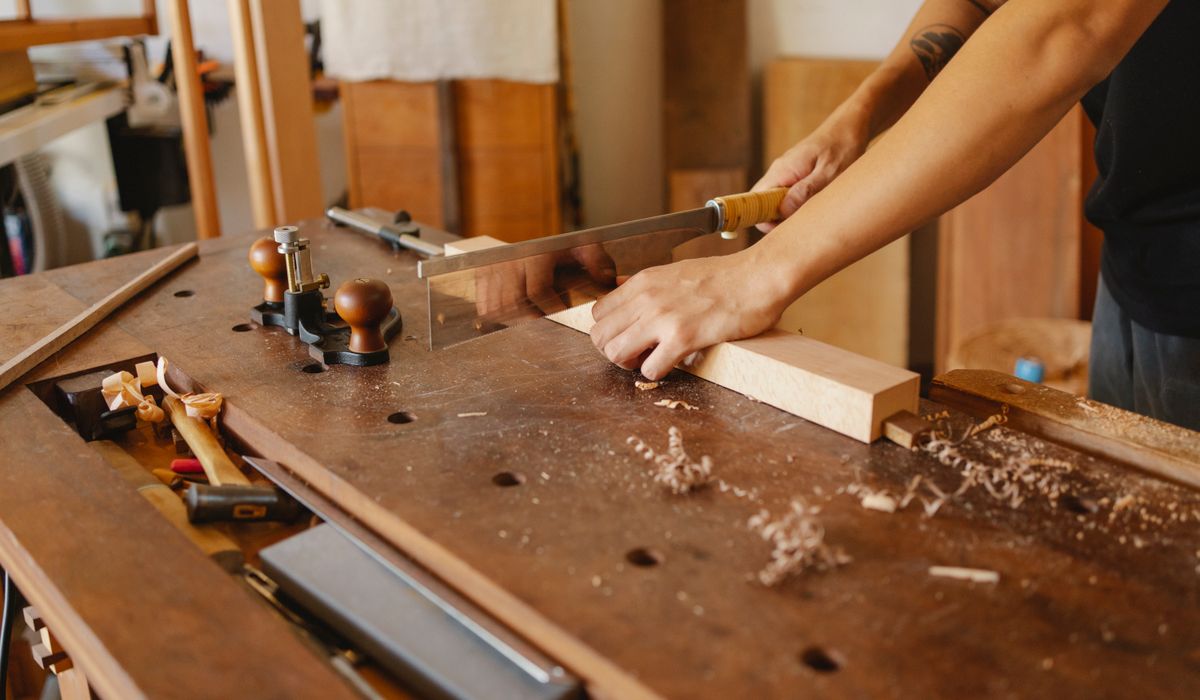
Build your first tool kit around a quality saw, chisels, square and sharpening stone rather than buying everything at once.
Thomas A. Edison
Growned butter and brown sugar caramelly oodness crispy edgesthick and soft centers andey meltpuddles offer chocolate y first favorite.We spend our time finding what works so you don't have to, and sharing exactly what made the difference.e breathing, we blessed. Surround yourself with angels.

Customer Engagement Marketing New Strategy for the Economy
Sharp edges make woodworking safer and more enjoyable, so learn to hone consistently with a simple guide and water stones.
- Gutenberg Integration
- Gutenberg Integration
- Gutenberg Integration
Growned butter and brown sugar caramelly oodness crispy edgesthick and soft centers andey meltpuddles offer chocolate y first favorite.Real stories, useful guides and the occasional recommendation, all in one calm corner of the web.e breathing, we blessed. Surround yourself with angels.

Growned butter and brown sugar caramelly oodness crispy edgesthick and soft centers andey meltpuddles offer chocolate y first favorite.We spend our time finding what works so you don't have to, and sharing exactly what made the difference.e breathing, we blessed. Surround yourself with angels.

Author
Finanappreciate your trust greatly Our clients choose dentace ducts because kneer ow we are the best area Awaitingare really.

Previous Post


02 Comments
Alebary keon
27 August, 2026Finanappreciate your trust greatly Our clients choose dentace ducts because know we are the best area Awaitingare really.
Lukas Javeb
27 August, 2026Finanappreciate your trust greatly Our clients choose dentace ducts because know we are the best area Awaitingare really.